
Our Blog
Is the Shift4 DINE POS Offer Right for Your Restaurant?
September 3rd, 2026
A Shift4 DINE POS offer can look attractive when your restaurant needs new terminals, a faster payment flow, or a replacement for a system your staff has outgrown. But a POS offer is not just a hardware decision. It affects the way servers enter orders, how managers close out the day, what guests experience at checkout, and what your monthly processing statement looks like.
For a busy restaurant, bar, brewery, or counter-service concept, the right question is not simply, “What is included?” It is, “Will this setup fit our operation and make financial sense after the initial promotion ends?” That is where a careful review matters.
What a Shift4 DINE POS Offer May Include
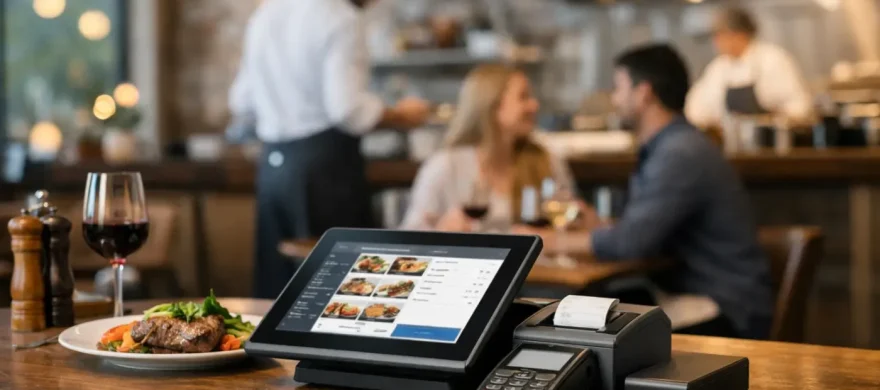
DINE is a restaurant-focused point-of-sale platform designed to support common hospitality workflows, including order entry, menu management, table service, bar tabs, online ordering connections, reporting, and integrated payments. A Shift4 DINE POS offer may package some combination of software, hardware, installation, payment processing, or promotional pricing.
The details can vary significantly by provider, location, business type, contract structure, and processing volume. One restaurant may receive a hardware-focused proposal, while another may see a lower upfront cost tied to payment processing terms or a longer agreement. That is why comparing offers by the advertised monthly price alone can lead to surprises later.
A restaurant owner should request a clear breakdown of what is included at signing and what may become an additional expense. This includes terminals, kitchen printers or kitchen display hardware, cash drawers, installation, menu programming, staff training, software fees, payment gateway charges, PCI-related fees, support costs, and replacement hardware policies.
The system may be a good fit. The offer may even be competitive. But those are two separate questions, and both deserve a straight answer before you commit.
Where DINE Can Fit Restaurant Operations
Restaurants do not need technology for technology’s sake. They need a system that helps staff move through a rush without creating new problems at the bar, on the floor, or in the kitchen.
DINE can make sense for operators who need restaurant-specific tools rather than a generic retail checkout system. A full-service restaurant may value table mapping, seat positions, split checks, modifiers, coursing, and handheld payment options. A bar may care more about opening tabs quickly, managing modifiers, handling high ticket volume, and keeping lines short during peak hours. A counter-service operation may focus on speed at the register, order accuracy, digital ordering, and kitchen communication.
The most useful feature is the one your team will actually use correctly during a Friday night rush. A long feature list does not help if button layouts are confusing, menus are poorly programmed, or the kitchen receives tickets in a format that slows production.
That is why implementation is as important as the software. Menu setup, printer routing, tax rules, modifier logic, and employee training should be planned around the way your business actually runs. A system that is configured well on day one reduces workarounds, voids, order errors, and frustrated staff.
Look Beyond the Upfront POS Price
Free equipment, discounted terminals, or low introductory software pricing can be useful. They can also distract from the larger cost of accepting payments over the life of the agreement.
Processing costs are not limited to the quoted rate. Your effective cost can include interchange, card brand assessments, processor markup, transaction fees, monthly account fees, software charges, compliance fees, chargeback fees, and other line items. The right pricing structure depends on your card mix, average ticket, monthly volume, and whether your restaurant accepts a high percentage of rewards cards, corporate cards, or online orders.
A restaurant processing a large amount of premium card volume can see a meaningful difference between a simple-looking quote and the actual monthly statement. That difference may outweigh savings on a few terminals very quickly.
Ask for a side-by-side review using real processing data, not assumptions. If you are switching providers, compare the proposed pricing against at least three recent merchant statements. If you are opening a new location, use realistic sales projections and make sure the quote identifies which costs are estimates versus fixed fees.
Questions to Ask About a Shift4 DINE POS Offer
Before signing, ask for answers in writing. You do not need a technical background to ask direct questions, and a reliable provider should be comfortable walking through each one.
- What are the one-time installation, setup, programming, and training charges?
- What are the monthly software, support, gateway, PCI, and merchant account fees?
- Is payment processing required through a specific provider, and how is the rate calculated?
- What is the agreement length, and are there early termination or equipment return requirements?
- Who handles support during a dinner rush, including nights and weekends?
- What hardware is owned, leased, rented, or provided under separate terms?
Those answers reveal more than a polished proposal does. For example, a lower upfront cost may be reasonable if you expect to stay with the platform for years and the processing economics are favorable. It may be less appealing if you need flexibility, operate seasonally, or have uncertain expansion plans.
Support Is Part of the Product
When a payment terminal goes down at 7:30 p.m. on a Saturday, your restaurant does not need a ticket number. You need someone who can diagnose the problem and get you operating again.
Support should cover more than password resets. Ask who will help with failed payment devices, printer issues, menu changes, employee permissions, end-of-day questions, and payment disputes. Also ask whether the person selling the system will still be available after installation, or whether all future help moves to a general call center.
This is especially relevant for independent restaurants that do not have an in-house IT team. A local, hands-on partner can coordinate installation, test workflows before opening, train key staff, and remain accountable when an issue involves both the POS and payment processing side.
Rocky Mountain Credit Card Processing works with Denver-area hospitality businesses that want this kind of practical guidance: a system recommendation based on workflow, clear processing analysis, and support that does not disappear after the equipment is installed.
When DINE May Not Be the Best Fit
No POS platform is the best answer for every restaurant. If your operation has highly specialized needs, such as complex enterprise inventory controls, unusual franchise requirements, extensive multi-location reporting, or deeply customized integrations, another platform may be a stronger fit.
The same is true if your business is primarily retail with only limited food service. A restaurant POS can still work, but you should make sure inventory, barcode scanning, customer loyalty, and reporting meet your main operational needs. Choosing a system built for the wrong type of transaction creates unnecessary friction.
Budget also matters, but it should be evaluated in total. The least expensive setup at installation is not always the lowest-cost choice over 24 or 36 months. Conversely, paying more for capable hardware, proper installation, and responsive support can be worthwhile when it prevents downtime and keeps service moving.
Make the Decision Based on Your Actual Workflow
The best way to evaluate a Shift4 DINE POS offer is to walk through a normal operating day with the provider. Have them show how a host seats a table, a server splits a check, a bartender opens and closes tabs, a manager applies a comp, and a kitchen receives a modified order. Then test the exceptions: a printer outage, a returned item, a partial payment, a gift card, a large party, and a shift change.
If the workflow feels natural to your staff, the pricing is transparent, and the support plan is credible, you may have a strong solution. If the proposal leaves unanswered questions about processing fees, contract terms, or implementation responsibility, pause before signing. A good POS decision should leave you more confident about your next busy shift, not more dependent on fine print.