
Our Blog
Restaurant POS Leasing vs Buying Explained
August 8th, 2026
A failed terminal during Friday dinner service is expensive. So is signing a POS agreement that looks affordable at first, then ties your restaurant to equipment, processing terms, or monthly fees that no longer make sense. That is why restaurant POS leasing vs buying is not just an accounting decision. It affects cash flow, staff performance, support, and your ability to adapt when the business changes.
For many independent restaurants, bars, and breweries, the best choice comes down to one question: do you need to preserve cash now, or do you want the lowest long-term cost and the most control? There is no one right answer, but there are clear warning signs to watch for before you commit.
What Buying a Restaurant POS Really Means
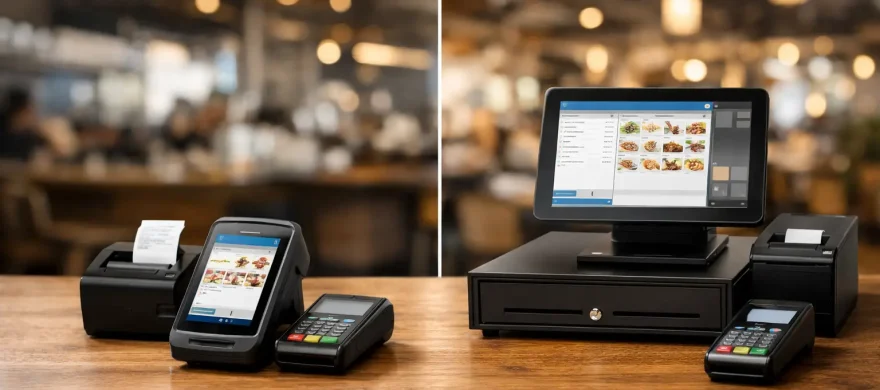
Buying a POS system usually means paying for the hardware upfront. Depending on your setup, that may include countertop terminals, handheld devices, receipt printers, cash drawers, kitchen printers or kitchen display screens, routers, and installation. Software is generally still a recurring monthly cost, and payment processing fees still apply.
The main benefit is ownership. Once the equipment is paid for, it is yours. You are not paying a hardware lease charge month after month, and you have more freedom to keep the system, replace individual components, or change service providers when your agreement allows it.
For an established restaurant with available capital, buying often produces the lower total cost over several years. A busy full-service restaurant might need several terminals and handhelds, so the upfront number can be meaningful. But compare that number against 36, 48, or 60 monthly lease payments. The difference can be substantial.
Buying also gives you a cleaner view of your operating costs. You can separate the one-time equipment investment from recurring software, support, and processing expenses. That makes it easier to identify where monthly costs are rising and whether your processor or POS provider is still a good fit.
When buying makes sense
Buying is often the practical move when your restaurant has stable revenue, sufficient cash reserves, and a clear idea of the technology it needs. It also works well for operators who want to avoid long contracts and who expect to keep their equipment for several years.
It can be especially attractive when you are replacing an outdated system rather than opening from scratch. You may be able to reuse certain equipment, such as printers, cash drawers, or network components, reducing the initial investment. A careful site review can identify what is reusable before you buy more than you need.
Buying is not automatically cheaper, however. A low-priced system that lacks table management, online ordering integrations, inventory controls, or reliable support can cost more in lost time and replacement purchases. The goal is not to buy the least expensive hardware. It is to buy a setup that fits the way your staff actually works.
Restaurant POS Leasing vs Buying: The Lease Side
Leasing spreads the equipment cost into predictable monthly payments. That can be helpful when opening a new restaurant, renovating a dining room, adding a bar program, or protecting working capital for payroll, food costs, permits, and marketing.
The cash-flow advantage is real. Instead of spending several thousand dollars before opening day, you may be able to deploy the equipment with little or no upfront hardware expense. For an operator juggling construction delays and opening costs, that breathing room can matter.
Leasing may also make sense for a business that needs a larger installation immediately. Multiple stations, handheld ordering devices, kitchen display systems, and customer-facing payment devices add up quickly. Monthly payments can make a complete implementation more manageable than trying to cut corners on the setup.
But a lease deserves close scrutiny. The monthly payment alone does not tell you what the equipment will cost. Ask for the total of all payments over the full term, whether the lease is cancellable, whether you own the equipment at the end, and what happens if a device fails. Some agreements are designed more like financing arrangements, while others leave the merchant with limited flexibility and a costly buyout.
The lease terms that deserve a second look
Before signing, make sure you can answer these questions in plain language:
- How many months am I committed to paying?
- What is the total cost of the lease, including any end-of-term buyout?
- Can the equipment be returned, upgraded, or purchased at the end?
- Is the hardware lease connected to a processing agreement or early termination fee?
- Who provides replacement equipment and support when something fails during service?
If a provider cannot clearly explain these terms, that is a problem. Restaurant owners should never have to decode a contract to learn whether they are renting a terminal or financing it at a high effective cost.
Do Not Compare Hardware Costs in Isolation
A POS system is more than an iPad stand and a card reader. The long-term cost includes software subscriptions, payment processing rates, gateway fees, online ordering tools, support plans, installation, hardware warranties, and charges for additional users or locations.
Processing costs deserve particular attention. An attractive lease offer can lose its appeal if it requires rates or fees that are higher than your current setup. Even a small increase in effective processing cost can outweigh the value of subsidized hardware for a restaurant with significant card volume.
Ask for a complete monthly picture. Review your merchant statement, estimate the software and equipment charges, and calculate the total cost over the expected term. If the proposal includes a processing rate, look beyond the headline percentage. Monthly minimums, PCI fees, noncompliance fees, batch fees, gateway charges, and markup on interchange all affect what lands on your statement.
A local advisor can be valuable here because the decision is not only about financing. Rocky Mountain Credit Card Processing helps hospitality operators evaluate POS options alongside their current processing costs, so the equipment decision does not create an avoidable expense elsewhere.
Match the Decision to Your Restaurant’s Stage
A new restaurant has different priorities than a proven neighborhood bar. If you are opening soon and cash is tight, a reasonable short-term lease or financing plan may protect capital for the expenses that keep the doors open. The key word is reasonable. It should have understandable terms, appropriate equipment, and a total cost you can live with.
A mature restaurant with consistent sales may be better served by purchasing equipment and limiting recurring obligations. That approach can reduce long-term cost and put the business in a stronger position to negotiate services separately.
Expansion changes the equation too. If you are adding patios, locations, delivery volume, or more complex bar service, buying a minimal system can create another replacement project within a year. In that situation, financing the right system may be smarter than purchasing a system your operation will outgrow immediately.
Seasonality matters as well. Denver patios, ski-season traffic, festivals, and event-driven business can create uneven revenue. If winter is your slow period, do not accept a fixed monthly obligation without understanding how it fits your lowest-revenue months. A POS payment should support your operation, not become another bill that creates pressure when sales soften.
Make Sure the Equipment Solves Real Service Problems
The right POS should shorten steps for servers, bartenders, managers, and guests. It should handle your menu structure, modifiers, split checks, tabs, tips, void permissions, reporting, and payment flow without forcing staff to invent workarounds.
Before choosing a lease or purchase, test the system against your busiest situations. Can a bartender start and transfer tabs quickly? Can servers split a six-way check without calling a manager? Can the kitchen clearly see modifiers? Can managers access sales and labor information without waiting until the next day? These operational details determine whether the system helps throughput or slows it down.
Training and installation are part of that decision. A system is only useful if the team knows how to use it before a packed shift. Confirm who will configure menus, install equipment, train employees, and answer the phone when an issue occurs. Good support is not a luxury in hospitality. It is protection against lost sales and frustrated guests.
A Better Way to Decide
Start with your operational requirements, then compare the full financial terms. Do not let a low upfront price choose the POS for you. Build a proposal around the number of stations you need, the way you take orders and payments, the reports you rely on, and the support your team expects.
Then review both paths over the same period, usually three to five years. Include upfront equipment costs, every monthly lease payment, software subscriptions, warranty or replacement coverage, processing fees, and end-of-term obligations. If the numbers are close, prioritize the option with clearer terms, better service, and more flexibility.
Your POS should make a busy shift easier, not give you another contract to worry about. A straightforward review before you sign can protect your cash, reduce unnecessary monthly costs, and leave your team focused on the guests in front of them.