
Our Blog
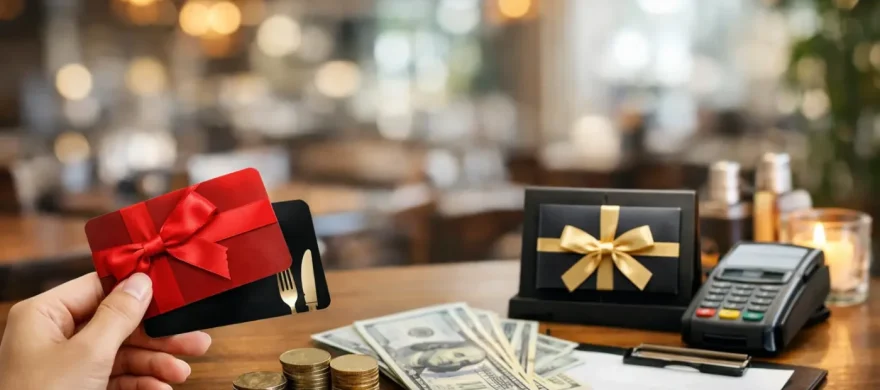
Restaurant Gift Card Program Setup That Pays Off
August 26th, 2026
A gift card display by the register is easy. Building a program that staff can sell correctly, guests can use without friction, and managers can reconcile at month-end is the real work. A thoughtful restaurant gift card program setup turns a popular convenience into upfront revenue, repeat visits, and a better guest experience.
For restaurants, bars, and breweries, gift cards are not a side project. They affect your point-of-sale system, payment processing, employee training, accounting, marketing, and customer support. Get those pieces right before launch, and the program earns its place at the counter. Get them wrong, and staff will be stuck calling for help while a guest waits to pay.
Start With the Operational Goal
Most restaurants launch gift cards because customers ask for them around holidays, birthdays, graduations, and employee appreciation events. That is a valid reason, but it is not a complete plan. Decide what the program should accomplish for your business.
You may want to bring back occasional guests, increase average checks when cards are redeemed, create a simple corporate gifting option, or give regulars a convenient way to share your restaurant. A neighborhood brewery may benefit from branded physical cards sold at events. A fast-casual location with a strong online following may get more value from digital cards that can be delivered instantly.
The right format depends on how customers buy from you. Physical cards are visible, tangible, and still popular for in-person gifting. Digital cards are convenient, especially for last-minute purchases and remote buyers. Many restaurants need both. The key is making sure both options draw from the same balance system so a guest can buy online and redeem at the bar without confusion.
Make POS Integration the First Requirement
A gift card program should work inside the POS system your team already uses to ring orders, take payments, handle refunds, and close shifts. If a cashier has to open a separate app, type in card numbers manually, or use a standalone terminal, your program adds steps at the busiest point of service.
Ask direct questions before choosing a provider. Can staff activate and reload cards from the same screen used for regular transactions? Can cards be checked, partially redeemed, or replaced if they are lost? Does the system support both printed and digital cards? Can managers see outstanding gift card balances and sales by location?
For multi-location restaurants, centralized reporting matters just as much as the checkout experience. A card purchased at one location should redeem at another if that is your policy. Make sure the POS configuration reflects how your operation actually runs, including separate concepts, franchises, or locations with different ownership structures.
A lower sticker price is not always the better choice if it creates extra work every day. The best-fit system is usually the one that handles gift cards, payments, and reporting in one practical workflow while giving you support when something goes wrong on a Saturday night.
Set Rules Before You Put Cards on Sale
Gift cards feel simple to guests, but managers need clear policies behind them. Decide how you will handle lost cards, damaged cards, suspected fraud, refunds, promotional cards, and unused balances. Put those decisions in writing and train the staff on the parts they need to know.
For example, a guest may ask for a refund on a gift card purchased as a present. Your policy needs to address whether the original purchaser can receive one, what proof is required, and how the transaction is recorded. Without a policy, employees may make different decisions at different shifts, creating avoidable customer-service issues and accounting headaches.
Be careful with expiration dates and inactivity fees. Gift card rules vary by state, and federal requirements may also apply. Many restaurant operators choose a simple guest-friendly policy instead of trying to recover small unused balances through fees. Confirm the rules that apply to your business with qualified legal and accounting advisors, then configure the POS accordingly.
Promotional cards deserve their own rules. If you run an offer such as “Buy $100 in gift cards, get a $20 bonus card,” decide when the bonus can be redeemed, whether it can be combined with other discounts, and whether it expires where permitted. A promotional card is a marketing expense. It should not be treated exactly like cash purchased by a customer.
Price the Program Beyond the Plastic Card
Gift card costs can include card stock, custom design, digital delivery, activation fees, monthly platform fees, transaction costs, and replacement cards. There may also be processing costs when a card is purchased, depending on your setup. Do not evaluate a program based only on the price of a box of physical cards.
Review the full economics. A premium-looking custom card can support your brand and encourage higher-value gifting, but it may not make sense for a small counter-service operation with modest holiday volume. On the other hand, generic cards can look like an afterthought at a restaurant built around special occasions.
It also helps to understand the cash flow. When customers buy gift cards, you receive cash now, but you still owe goods or services when those cards are redeemed. Your accountant will determine the proper revenue recognition and liability treatment. Your POS reporting should make outstanding balances and redemptions easy to track so no one is relying on a spreadsheet that is months behind.
Train Staff for Fast, Confident Transactions
A gift card program fails at the counter when employees are unsure how to sell, redeem, reload, or troubleshoot cards. Training does not need to be complicated, but it should be hands-on. Have staff complete a test sale, a partial redemption, a balance inquiry, and a basic correction before launch.
Employees should know how to explain the program in one sentence: physical and digital cards are available, they can be used for food and beverages under your policy, and balances can be checked at checkout. They should also know what not to promise. If cards cannot be used for online orders, catering deposits, gratuity, or alcohol-only purchases, that limitation needs to be clear.
Managers need a deeper level of training. They should know how to run reports, void an activation error, investigate a disputed balance, and identify signs of fraud. Gift cards can attract scammers who pressure employees to key in numbers, accept suspicious phone instructions, or override standard procedures. A simple rule helps: no staff member should activate, refund, or transfer gift card value outside the approved POS process.
Give Guests a Reason to Buy Now
Gift cards sell best when they are easy to notice and easy to purchase. Place physical cards where guests pay, but do not rely on a countertop display alone. Mention them on receipts, in holiday messaging, on catering materials, and in customer emails if you use those channels.
Seasonal pushes work because they match the reason people give gifts. The weeks before winter holidays, Mother’s Day, graduation season, and year-end business gifting are natural opportunities. For restaurants with private dining or catering, gift cards can also be part of a corporate outreach conversation. A local employer may not be ready to book an event, but they may be ready to purchase cards for a team.
Keep promotions controlled. A bonus-card offer can increase sales, but only if the margin and redemption terms make sense. Consider setting a minimum purchase threshold, limiting the offer to a defined period, and excluding the bonus value from certain discounts. Track results after the promotion, not just total cards sold. You want to know whether the offer created profitable future visits.
Measure What Happens After Redemption
Gift card sales are only one number. Look at activation volume, average card value, reloads, redemptions, outstanding balances, and the average check when a gift card is used. A $50 card that brings in a first-time guest who spends $72 with a friend has a different impact than a card used by an existing regular for their usual order.
Watch for operational friction too. Are employees asking for manager help? Are balance inquiries taking too long? Are online gift cards landing in spam folders? Are multiple locations handling redemptions consistently? These issues are often more valuable to fix than launching another promotion.
A local payments partner can help review the POS workflow, processing costs, reporting, and staff setup before cards go live. Rocky Mountain Credit Card Processing works with hospitality operators who need a practical system that fits their service style, not another disconnected tool to manage.
A good gift card program should feel almost invisible on a busy shift: the guest buys it easily, the employee handles it confidently, the manager can account for it, and the next visit starts with a welcome reason to come back.